
Which routes lead into this role, and what should successors do next?
Trace the careers of everyone who holds a critical role across your market: where they started, the moves they made and how long each step took. Build development plans on real routes.
THE PROBLEM
Development plans are often based on one person’s career
Internal data shows the routes your own leaders took. It can’t show the patterns across hundreds of people who reached the role elsewhere.
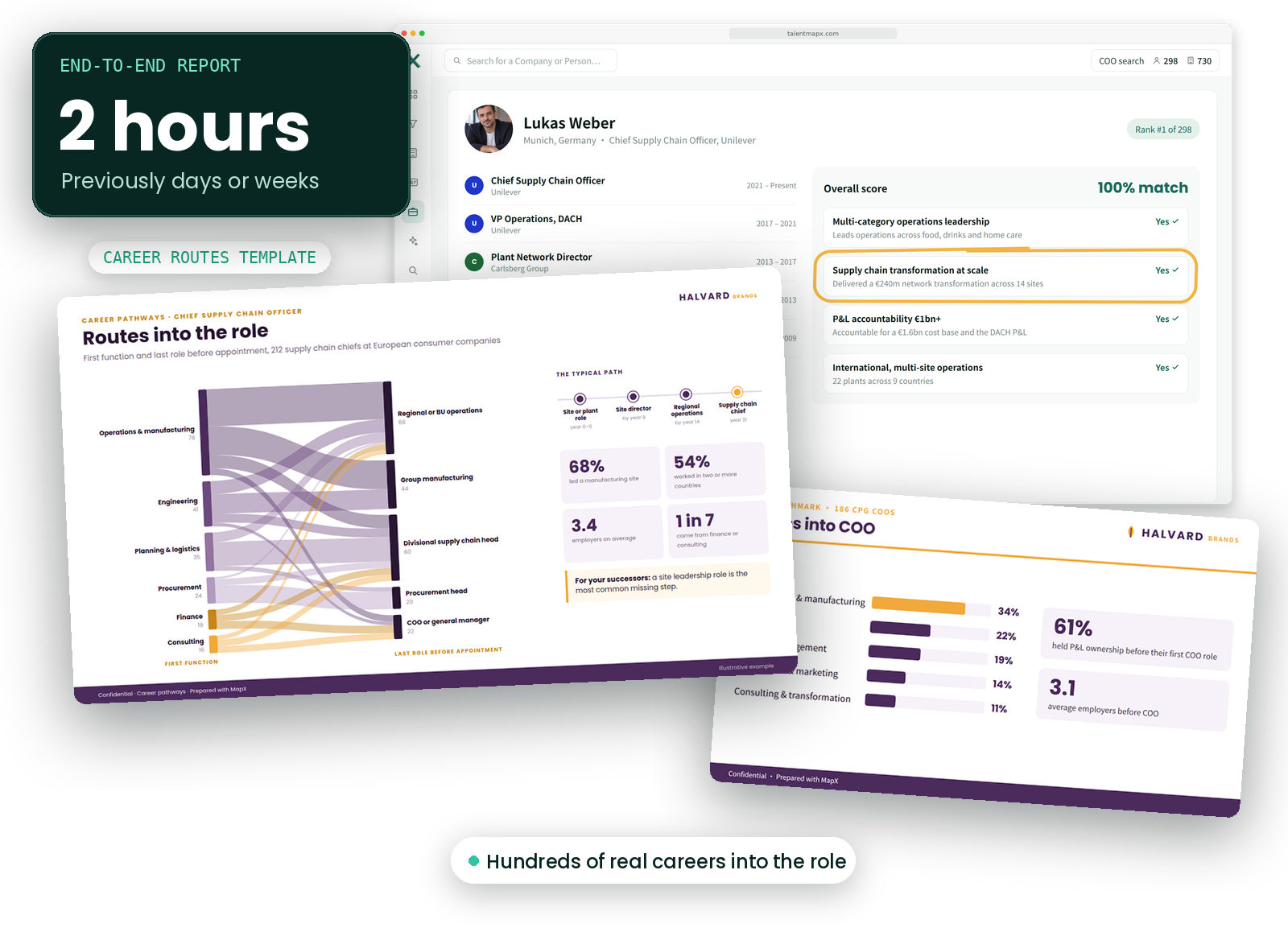
Career pathways analysis looks at the whole population instead. MapX traces the actual career histories of everyone who holds the role across the market, finds the moves they have in common and how long each step took, so development plans follow the routes that work rather than the one you happen to have seen.
One leader’s career is a story, not a pattern.
Competency frameworks describe the destination, not the route.
Mentoring advice reflects the experience of whoever is giving it.
MapX reads hundreds of real careers into the same role and shows what they share.
Questions it answers
Which functions do leaders in this role start in? See the starting points that most often lead to the role, and the ones that rarely do, across the whole market rather than your own company.
What was their last role before appointment? The step immediately before appointment is the clearest signal of what a successor needs next, and it is often not the obvious one.
How long does the typical route take? Time spent at each stage shows whether a successor is two years or six years away, which changes both the plan and the backup.
What should our successors do next? Comparing each person’s history with the common routes points to the single move that would most improve their readiness.
-

Where they start
Which functions do leaders in this role start in?
-

Last role before
What was their last role before appointment?
-

How long it takes
How long does the typical route take?
-

What comes next
What should our successors do next?
The ingredients behind the answer
Every company and career in MapX is classified the same way. Combine the ingredients and the answer gets sharper. Polaris does this for every search.
For career pathways, you choose the destination role, and MapX traces the careers of the people who hold it across the market, step by step, back to where they started.
-

Progression
Every move, promotion and change of function.
-

Tenure
How long each step took.
-

Functions
First function, and the functions crossed on the way.
-

Companies
Which employers produce leaders for this role.

What the output looks like
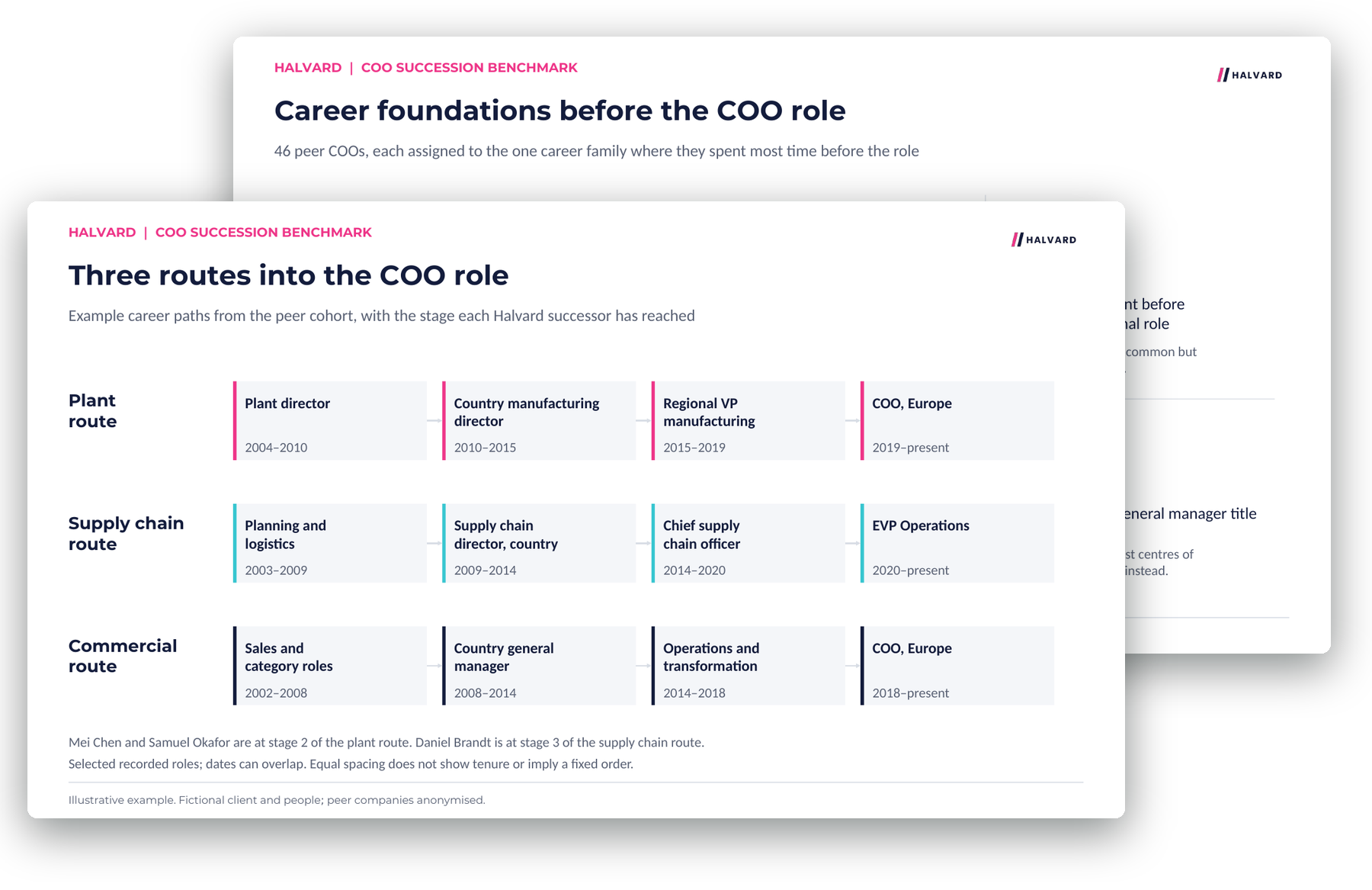
The career foundations of leaders in the role, the three routes most of them took, and how long each step took. Shown in a client’s brand, with illustrative data and fictional people.
The most common routes into the role, and how long each step takes
The functions and roles that most often lead to appointment
The next move that would most improve each successor’s readiness
Talent and leadership development teams use it to build development plans and rotations on evidence, and to show high-potential leaders what the route to the top role really looks like.
22m+
Senior leaders profiled, worldwide
2m+
Companies classified, public or private
420
Specialisms across 16 functions
11
Languages read in job titles
Questions teams ask
What teams ask before they start.
How many careers are analysed?
Every leader who holds the role in your chosen market, often several hundred, so the routes reflect a pattern rather than a handful of stories.
Which roles work best?
Senior roles with a clear population across companies, such as Chief Supply Chain Officer, CFO or Head of Digital, where the routes in vary most.
Can we compare several roles?
Yes. Run the analysis for each role and compare the routes side by side.
Can we focus on our sector?
Yes. Limit the analysis to your sector, your peers or your region, or widen it to see routes from adjacent industries.
Does it link to succession planning?
Yes. It pairs with succession benchmarking to show each successor’s next move.
Are the people named?
Yes. Every route links to the leaders behind it, which makes the findings easier to test and to discuss.
How do we get started?
Two calls: one to set up your report library in your brand, and one to trace the routes into a first role together.
Can it inform graduate and early-career design?
Yes. The earliest steps in common routes show which functions and experiences to build into early-career programmes.
Trace the routes into one critical role
Book a 45-minute demo. Bring a live search or a talent question and we'll show you what MapX finds, and what you'd get. Or start with the free sample pack: three finished reports in a client's brand.