
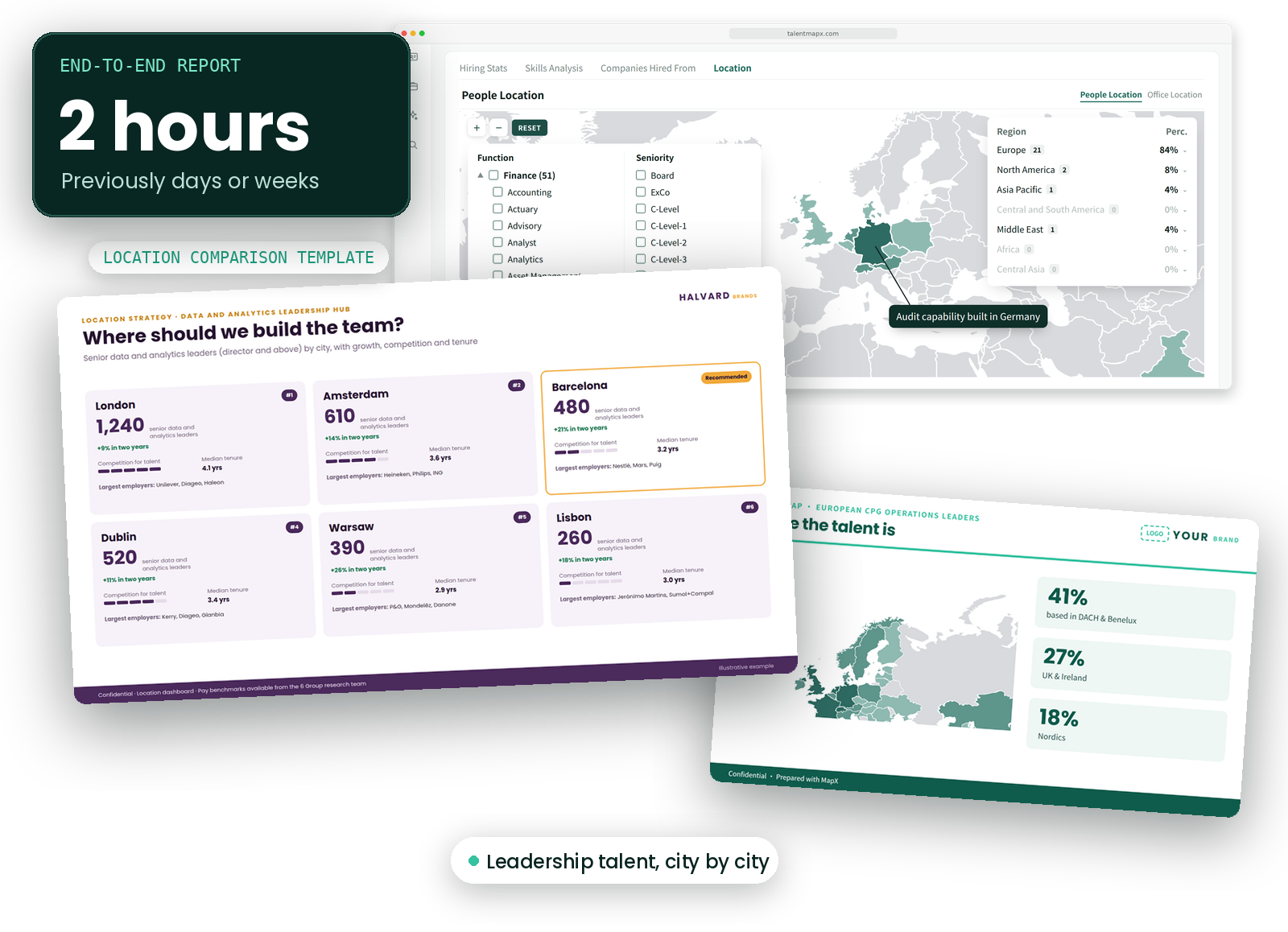
Where should we build the team?
Compare cities and countries by the senior talent available, how fast it is growing, who else is hiring and how long people stay. Choose a hub location with evidence.
THE PROBLEM
Your data shows where your people are, not where the talent is
Location decisions are often made on cost and instinct. The supply of senior talent, and the employers competing for it, decide whether a hub can be staffed and kept.
A talent location strategy needs the supply side as well as the cost side. MapX counts the senior leaders who do the role you need in each city you are considering, shows who already employs them and how long they tend to stay, so a site decision can be tested before it is made.
Cost models tell you what a location charges, not who you can hire there.
Headcount data shows where your people are today, not where the market is deep.
Property and incentive advice rarely covers leadership supply.
MapX compares cities on the leaders who actually exist in them, role by role.
Questions it answers
How many senior leaders in this function work in each city? A count of real people in scope for your roles, in every location on your shortlist, so the comparison is like for like.
Which locations are growing fastest? Movement into and out of each city over time shows which hubs are building leadership depth and which are thinning out.
Who are the largest employers we would compete with? See the companies that already hold the talent in each location, and how concentrated the market is around a handful of them.
How long do leaders stay, and how hard will they be to move? Tenure patterns by city show how settled the market is, which drives both time to hire and the premium you will need to pay.
-

Talent by city
How many senior leaders in this function work in each city?
-

Fastest growing
Which locations are growing fastest?
-

Who we compete with
Who are the largest employers we would compete with?
-

How movable
How long do leaders stay, and how hard will they be to move?
The ingredients behind the answer
Every company and career in MapX is classified the same way. Combine the ingredients and the answer gets sharper. Polaris does this for every search.
For location strategy, you choose the roles and the candidate cities, and MapX counts the leaders in scope in each one, with the employers that hold them and how long they tend to stay.
-

Locations
Senior talent by city, country and region.
-

Companies
The employer ecosystem: who else is hiring there.
-

Tenure
How long leaders stay, a sign of how hard they are to move.
-

Progression
How fast the talent pool is growing.

What the output looks like
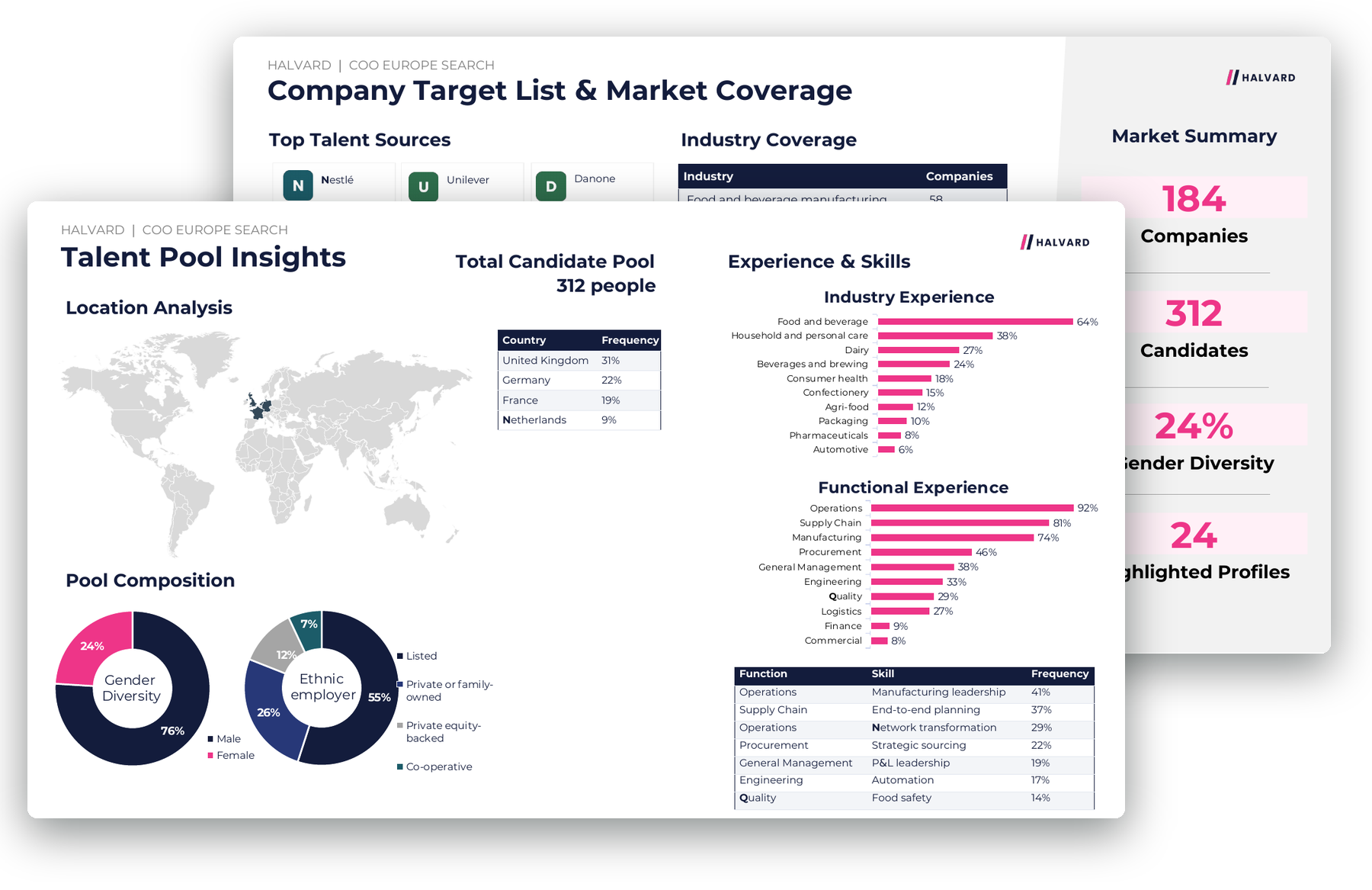
Where the senior talent pool sits by country and city, which employers you compete with there, and how experience is spread across markets. Shown in a client’s brand, with illustrative data and fictional people.
The senior talent pool by country and city, for the roles you need
The employers you would compete with in each location
How experience and tenure are spread across markets
Leadership and property teams use it alongside cost and incentive data, so a hub decision accounts for whether the leadership team can actually be hired and kept.
22m+
Senior leaders profiled, worldwide
2m+
Companies classified, public or private
420
Specialisms across 16 functions
11
Languages read in job titles
Questions teams ask
What teams ask before they start.
Do you include pay data?
Pay benchmarks come from 6 Group’s research team as an add-on, alongside the MapX analysis of where the talent is.
Which roles can we analyse?
Any leadership role MapX classifies, across 16 functions and 420 specialisms, so you can test a hub for the exact roles it needs to hire.
Can we analyse by city or by country?
Both. Analyse by city, country or region, and compare locations side by side on the same measures.
Does it show competing employers?
Yes. See the companies that already employ the talent in each location, and how concentrated the market is around them.
How current is the data?
MapX is refreshed continuously, so each analysis reflects the market when you run it.
Can we see named leaders?
Yes. Every count links to the leaders behind it, which helps when you move from a location decision to hiring the first team.
How do we get started?
Two calls: one to set up your report library in your brand, and one to compare a first set of locations together.
Is our work confidential?
Yes. Your analyses are confidential and kept separate for each customer.
Test one location question with real data
Book a 45-minute demo. Bring a live search or a talent question and we'll show you what MapX finds, and what you'd get. Or start with the free sample pack: three finished reports in a client's brand.