
How ready are our successors, compared with the market?
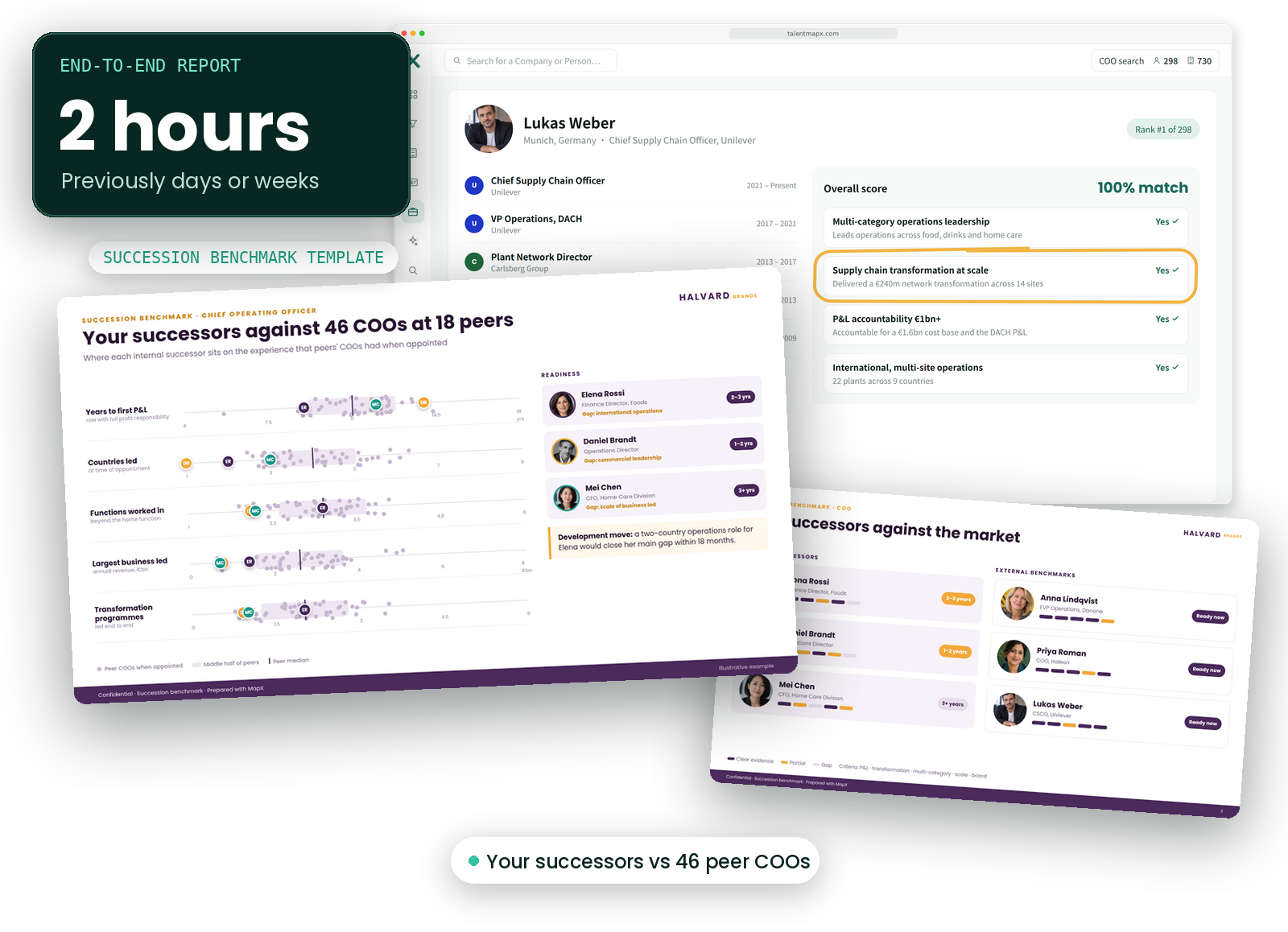
Benchmark internal successors against the leaders who hold the same role at peer companies, so readiness is measured against the market, not only against each other.
THE PROBLEM
A succession plan built only on internal data grades your people against each other
Your HR system knows your successors in depth: performance, potential and development plans. It can’t show what the leaders appointed elsewhere had done by the time they got the job, or who outside could step in if no one inside is ready.
Succession benchmarking adds that outside view. MapX finds the people who already hold the same role at comparable companies, works out what their careers looked like at the point of appointment, and places each of your successors on the same scale, so readiness is measured against the market rather than against each other.
Your talent review compares internal candidates with internal candidates.
Nine-box grids record judgement, not evidence from outside the company.
A one-off benchmarking study is out of date by the next board cycle.
MapX benchmarks your successors against real appointments, and can be rerun before every review.
Questions it answers
What experience did peers’ leaders have when they were appointed? See the scope, scale and functional background of the people who hold the role at comparable companies, measured at the point they were appointed rather than today.
Where does each successor sit against that benchmark? Each internal name is scored on the same criteria, so you can see who is close, who is two moves away, and on which dimensions.
Which development moves would close the gaps fastest? The benchmark shows which experiences matter most for the role, so development plans target the gap that actually blocks readiness.
Who outside could step in if we needed someone now? A ranked external list sits beside the internal one, so the board can see the fallback without starting a search.
-

Peer benchmark
What experience did peers’ leaders have when they were appointed?
-

Where each stands
Where does each successor sit against that benchmark?
-

Closing the gaps
Which development moves would close the gaps fastest?
-

Ready now outside
Who outside could step in if we needed someone now?
The ingredients behind the answer
Every company and career in MapX is classified the same way. Combine the ingredients and the answer gets sharper. Polaris does this for every search.
For a succession benchmark, you choose the role and the peer companies, and MapX builds the cohort of people who hold that role today, then reads their careers back to the point of appointment.
-

Progression
The experience peers’ leaders had when they were appointed.
-

Companies
Choose the peer set: competitors, or companies getting it right.
-

Seniority
Compare successors with leaders at the same level.
-

Tenure
How long peers stay in role, so you can time the plan.

What the output looks like
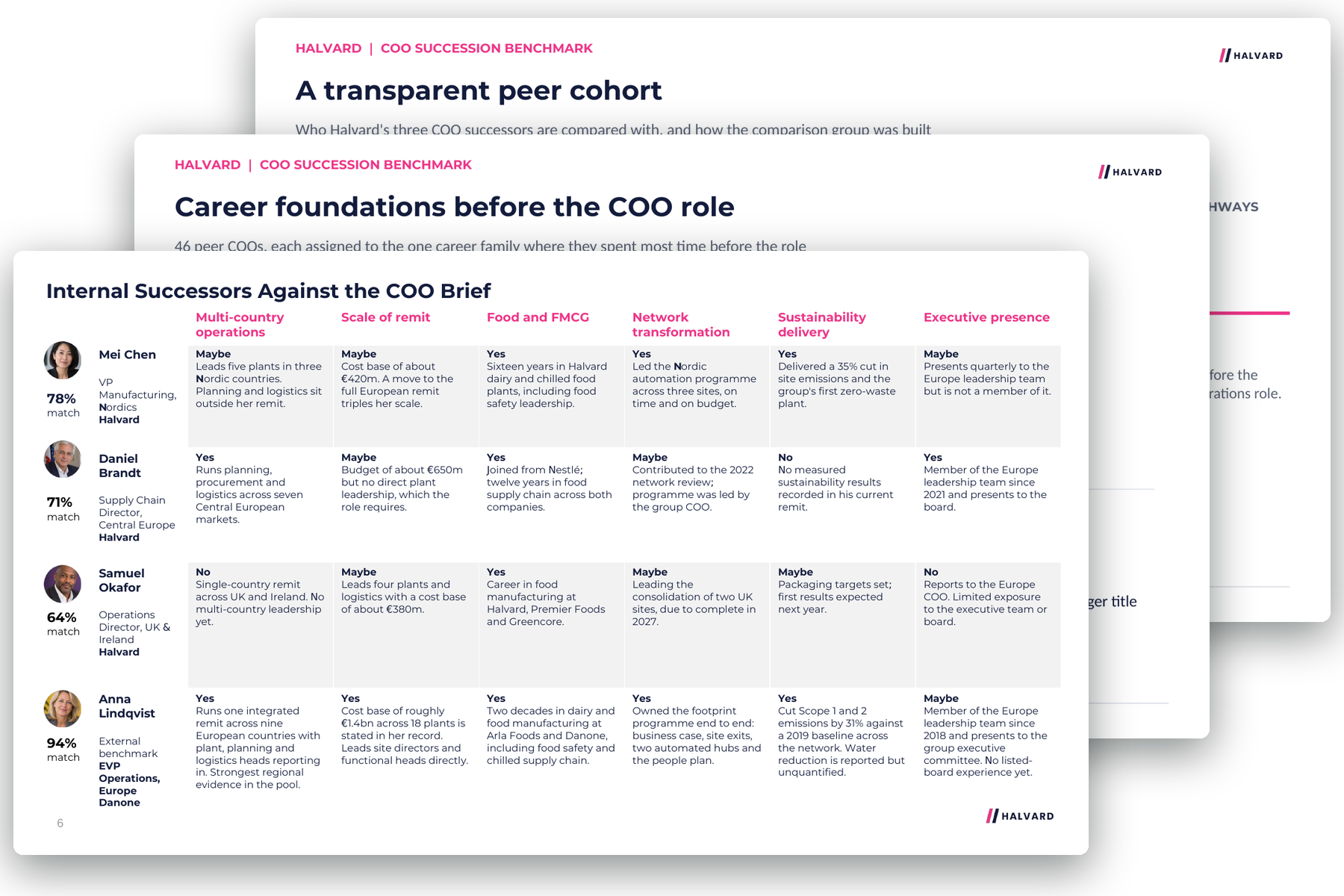
A transparent peer cohort, the career foundations behind the role, and your internal successors scored against the same brief, ending in a development plan. Shown in a client’s brand, with illustrative data and fictional people.
A transparent peer cohort, with every company and leader listed
The career foundations behind the role: scope, scale and functional moves
Each internal successor scored against the same brief, with the gap to close
Talent teams use it before succession reviews and board talent discussions, so readiness ratings rest on external evidence and each development plan targets the experience a successor is actually missing.
22m+
Senior leaders profiled, worldwide
2m+
Companies classified, public or private
420
Specialisms across 16 functions
11
Languages read in job titles
Questions teams ask
What teams ask before they start.
Do we need to share internal data?
No. The benchmark is built from the external market. You decide how much internal detail to add, and anything you add stays confidential to your team.
Which companies are used as peers?
You choose them: direct competitors, companies of a similar scale, or the businesses you most often lose leaders to. Every peer is classified the same way, so the benchmark is like for like.
Is anyone contacted?
No. Benchmarks are built from MapX data, and no one is contacted unless you ask 6 Group’s research team to engage.
How is readiness measured?
Each successor is scored against the experience that peers’ leaders had when they were appointed: scope, scale, functions and geographies. The gaps are shown dimension by dimension, not as a single label.
How often should we refresh it?
Most teams refresh annually alongside talent reviews, and again before any critical appointment, so the board always sees a current view.
Can we present it to the board?
Yes. Reports come as editable PowerPoint in your brand, with the evidence behind every comparison, ready for a talent committee or board pack.
How do we get started?
Two calls: one to set up your report library in your brand, and one to run a first benchmark together on a critical role.
Does it link to career pathways?
Yes. Pair the benchmark with career pathways analysis to see the routes into the role and the next move that would close each successor’s gap.
Benchmark one of your successors, live
Book a 45-minute demo. Bring a live search or a talent question and we'll show you what MapX finds, and what you'd get. Or start with the free sample pack: three finished reports in a client's brand.